How it works
The rules of the counter, one step at a time.
1. Pick a plate
The board has 36 plates, A1 to F6. Choose one and stake USDG on it. You can stake on as many plates as you like, and add to a plate more than once. Stakes close a few seconds before the minute is up.
2. The chef takes one
Each round lasts a minute. When it closes, one plate is drawn. Every plate has the same 2.78% chance, however much is on it.
Why nobody can pick the winner
Robinhood Chain has a single sequencer, so a draw taken from a block hash would hand every round to one operator. makimine uses drand instead: a public randomness beacon published every three seconds by a group of independent organisations, impossible to predict before it appears and checkable by anyone afterwards.
Which beacon a round uses is fixed by the moment it closes, and the contract checks the beacon’s signature itself. Anyone can submit it; a wrong one simply fails. Winnings are claimed by each miner rather than pushed, so one broken wallet can never hold up a round.
Campaigns, after launch
Once the counter is running, projects will be able to rent a plate and put their logo on it. A campaign budget will be split like this:
| Rewards to miners | 60% |
|---|---|
| The pantry (real-world assets) | 20% |
| Buyback and burn | 10% |
| Liquidity | 5% |
| Running costs | 5% |
The pantry
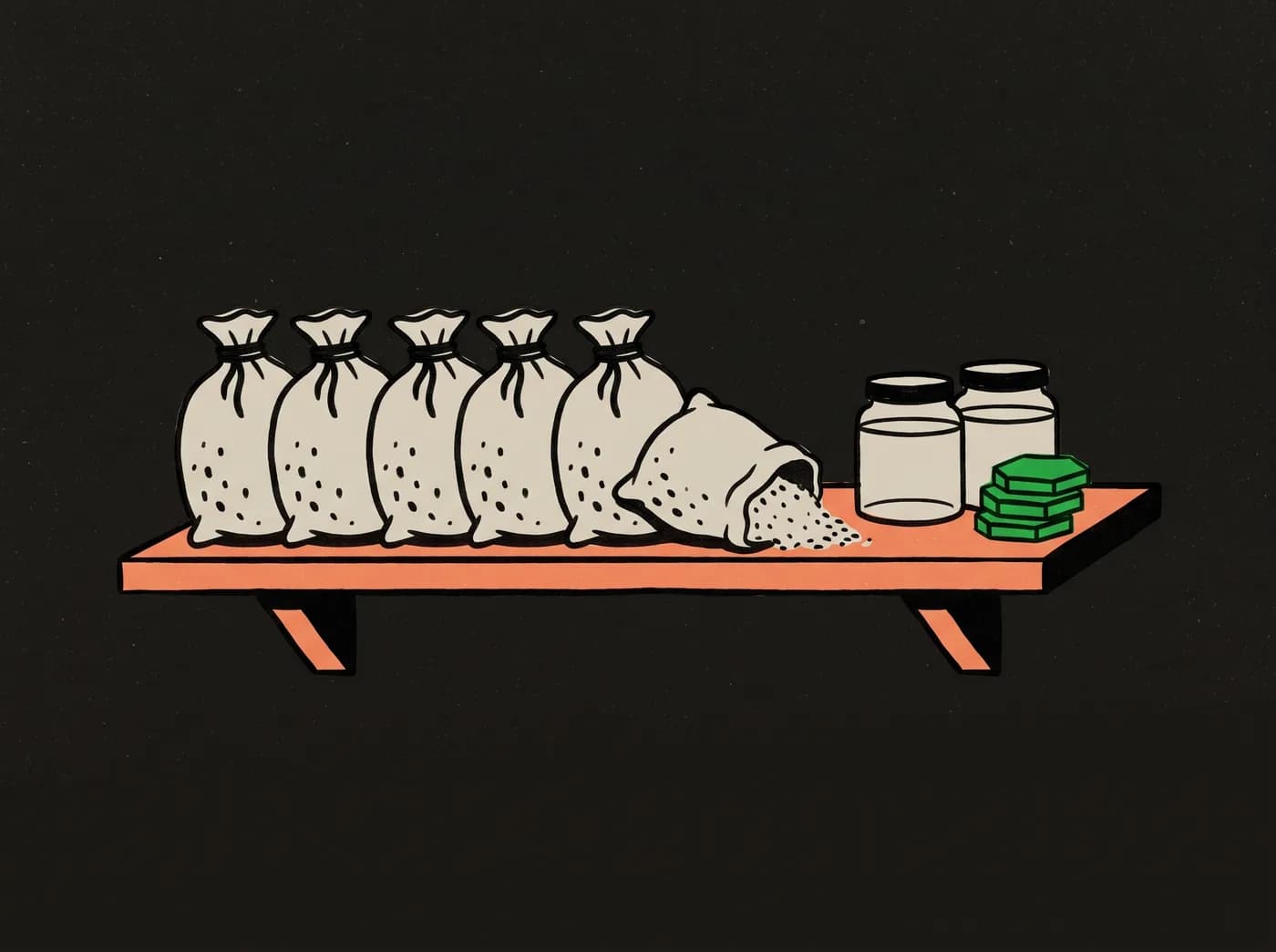
The pantry is the reserve: tokenised treasuries, credit, property and gold bought with campaign money. Purchases only go in. What the pantry earns goes to miners and to buybacks, which is how a campaign that ran once keeps paying the counter.
Look inside the pantryNetwork
- Network
- Robinhood Chain
- Chain ID
- 4663
- Stakes and payouts
- USDG
- Counter contract
- Not deployed yet
Questions
- Can I lose what I stake?
- Yes. Stake on a plate that isn't drawn and it goes to the miners of the plate that was. Only stake what you're fine losing.
- Are some plates likelier to win?
- No. All 36 plates have the same chance every round, whatever is staked on them. Staking more raises your share of a plate, not its odds.
- Do I need a token to play?
- No. A wallet on Robinhood Chain with some USDG to stake and a little ETH for gas.
- Why do I sign twice the first time?
- The first signature lets the counter move that much USDG from your wallet. The second is the stake itself. Next time, if the allowance still covers it, there's only one.